
Náðu dolluni í 267 mílur


 by Alpina » Tue 06. Jul 2010 08:40
John Rogers wrote:http://www.autoblog.com/2010/07/04/bugatti-veyron-16-4-super-sport-sets-land-speed-record-at-267-81/
Náðu dolluni í 267 mílur
Sabine Schmitz wrote:"Fear disturbs your concentration."

by Benz » Tue 06. Jul 2010 09:45
Alpina wrote:John Rogers wrote:http://www.autoblog.com/2010/07/04/bugatti-veyron-16-4-super-sport-sets-land-speed-record-at-267-81/
Náðu dolluni í 267 mílur
431 km
þetta verður ekki auðslegið

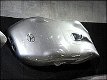
Wikipedia wrote:Rudolf Caracciola's record of 432.7 km/h (268 mph) over the flying kilometre on 28 January 1938, still remains the fastest ever officially timed speed on a public road as of 2010
by Alpina » Tue 06. Jul 2010 09:48
Benz wrote:
Hva... þeir eru bara að nálgast "Taxann" frá 1938, hann var nú reyndar ekki jafn kraftmikill og Veyroninn (bara 725 hestöfl) og reyndar ekki "production car"Wikipedia wrote:Rudolf Caracciola's record of 432.7 km/h (268 mph) over the flying kilometre on 28 January 1938, still remains the fastest ever officially timed speed on a public road as of 2010
Sabine Schmitz wrote:"Fear disturbs your concentration."
by Benz » Tue 06. Jul 2010 10:00
Alpina wrote:Þetta var MEGA input Benni

by Hannsi » Tue 06. Jul 2010 10:07

by Alpina » Tue 06. Jul 2010 11:39
Hannsi wrote:Eitthvað finnst mér hraðamet sem sett var árið 1938 vera dúbíus

Sabine Schmitz wrote:"Fear disturbs your concentration."
by Benz » Tue 06. Jul 2010 12:56
Alpina wrote:Hannsi wrote:Eitthvað finnst mér hraðamet sem sett var árið 1938 vera dúbíus
Ég myndi ekki rengja Þýska nákvæmni

Hannsi wrote:Eitthvað finnst mér hraðamet sem sett var árið 1938 vera dúbíus

The Mercedes-Benz W125 was a Grand Prix racing car designed by Rudolf Uhlenhaut to race during the 1937 Grand Prix season. The car was used by Rudolf Caracciola to win the 1937 European Championship and W125 drivers also finished in the second, third and fourth positions in the championship.
The supercharged engine, with 8 cylinders in line (94.0 x 102.mm) and 5,662.85 cc (345.56 CID), attained an output of up to 595 horse power (444 kW) in race trim. The highest test bed power measured was 637 BHP (646 PS) at 5,800 rpm. It gave 245 BHP (248 PS) at a mere 2,000 rpm. In 1938, the engine capacity of supercharged Grand Prix cars was limited to 3000cc, and the W125 was replaced by the Mercedes-Benz W154.
The W125 was considered the most powerful race car ever for about 3 decades, until large capacity US-built V8 engines in CanAm sportcars reached similar power in the mid 1960s. In Formula One racing itself, the figure was not exceeded until the early 1980s, with the appearance of turbo-charged engines in Formula One.
The W125 reached race speeds of well over 300 km/h (190 mph) in 1937, especially on the AVUS in Berlin, equipped with a streamlined body.
In land speed record runs, a Mercedes-Benz W125 Rekordwagen was clocked at 432.7 km/h (268.9 mph) over a mile and a kilometer. This car was fitted with a DAB V12 engine (82.0 x 88 mm) of 5,576.75 cc (340.31 CID) with a power of 726 BHP (736 PS) at 5,800 rpm. The weight of this engine caused the car to weigh over the 750 kg maximum limit. So it never appeared in Grand Prix.
) því árið 1903 var Daimler (DMG) kominn með 90 hestafla vél í keppnisbíla sína (Mercedes Simplex). 1905 120 hestafla vél, 1908 140 hestafla vél. Allar voru þessar þó frekar stórar í "lítrum talið". 

by bimmer » Tue 06. Jul 2010 13:03

Alpina wrote:S85 er vondur mótor þó að hann sé kraftmikill...
by Benz » Tue 06. Jul 2010 14:46
bimmer wrote:Þennan taxa væri nú nær að bera saman við það sem menn eru að gera á saltsléttunum
vestanhafs - þetta á ekkert skylt við götubíl eins og Veyron.
Benz wrote:......og reyndar ekki "production car"
by Aron Fridrik » Tue 06. Jul 2010 15:03

by SteiniDJ » Tue 06. Jul 2010 15:39
Alpina wrote:Hannsi wrote:Eitthvað finnst mér hraðamet sem sett var árið 1938 vera dúbíus
Ég myndi ekki rengja Þýska nákvæmni
by Jón Ragnar » Tue 06. Jul 2010 15:57
by bimmer » Tue 06. Jul 2010 16:05
John Rogers wrote:Veyron SS
Rétt eins og Nova SS og Camaro SS
Alpina wrote:S85 er vondur mótor þó að hann sé kraftmikill...
Users browsing this forum: No registered users and 32 guests